Lighting the Way: Sustainable Mushroom Mycelium Pendant Lamps
As a reader, you may be familiar with the growing discourse surrounding sustainable design and manufacturing. Within this evolving landscape, a novel material has garnered attention: mushroom mycelium. This article explores the application of mycelium in the creation of pendant lamps, specifically focusing on the process, environmental benefits, and challenges associated with “Lighting the Way: Sustainable Mushroom Mycelium Pendant Lamps.”
Mycelium, the vegetative part of a fungus, consists of a network of fine white filaments called hyphae. It acts as the root system of a mushroom, growing by absorbing nutrients from its substrate. This natural growth process makes mycelium a compelling candidate for sustainable material innovation.
Biological Properties of Mycelium
Mycelium exhibits several biological properties that lend themselves to material applications. Its rapid growth rate, typically days to weeks, allows for efficient production cycles. Once grown, the hyphae interlace and bind together, forming a dense, durable matrix. This self-assembling characteristic eliminates the need for energy-intensive manufacturing processes often found in traditional material production. Furthermore, mycelium can be grown on various agricultural waste products, such as sawdust, corn stalks, and hemp hurds, transforming these bypass streams into valuable resources. The resulting material is biodegradable, meaning it will naturally decompose at the end of its life cycle, returning its components to the environment without persistent pollution.
Mycelium in Material Science
The application of mycelium in material science is a relatively recent development. Early research focused on its potential as a packaging material, replacing polystyrene foam. However, its inherent strength, lightweight nature, and acoustic properties have expanded its utility into insulation, furniture, and now, lighting fixtures. Mycelium composites are often referred to as “fungal biomaterials” or “myco-materials.”
The material’s strength-to-weight ratio is a key advantage. While not as strong as steel, it can be engineered to possess compressive and tensile strengths suitable for various applications. Its porous structure also contributes to its insulation properties, both thermal and acoustic. Unlike many synthetic materials, mycelium composites are typically formaldehyde-free and non-toxic, addressing concerns about indoor air quality.
From Spore to Fixture: The Manufacturing Process
The creation of a mycelium pendant lamp Ckensu involves a carefully controlled biomanufacturing process. This process transforms fungal spores and agricultural waste into a functional and aesthetically pleasing lighting element.
Substrate Preparation and Inoculation
The initial step involves preparing the substrate, which serves as the mycelium’s food source. This typically entails sterilizing agricultural waste products to eliminate competing microorganisms. Sterilization is crucial to ensure the mycelium grows optimally without contamination. Common sterilization methods include autoclaving or pasteurization. Once sterilized, the substrate is cooled to an appropriate temperature.
Following substrate preparation, the substrate is inoculated with mushroom spores or liquid culture. This involves introducing a specific strain of fungus, chosen for its desired material properties. The inoculated substrate is then placed into molds, which dictate the final shape of the pendant lamp. These molds can be made from various materials, including reusable plastics or even biodegradable materials, further enhancing the sustainability of the process.
Growth and Consolidation
Once in the molds, the mycelium is allowed to grow under controlled environmental conditions. Factors such as temperature, humidity, and carbon dioxide levels are meticulously managed to optimize mycelial growth. This growth phase typically lasts several days to a few weeks, during which the hyphae colonize the substrate, forming a dense, interconnected network. As the mycelium grows, it binds the substrate particles together, creating a solid, cohesive structure. This process is analogous to how roots bind soil, but on a microscopic, cellular level.
During this period, the mycelium essentially “grows” the lamp shade. The interwoven hyphae create a natural composite material. The density and strength of the final product can be influenced by the type of mycelium strain used, the substrate composition, and the environmental controls during growth.
Drying and Finishing
After the mycelium has fully colonized the mold and achieved the desired density, the resulting form needs to be dried. Drying is a critical step that halts further mycelial growth and prevents spoilage. This is typically achieved through low-heat drying processes, which can be air drying, kiln drying, or oven drying. The drying process also strengthens the material by removing excess moisture, making it rigid and dimensionally stable.
Post-drying, the mycelium lamp shade may undergo various finishing treatments. These can include sanding to achieve a smoother surface, applying natural sealants for enhanced durability and water resistance, or even painting with non-toxic, biodegradable paints for aesthetic purposes. The extent of finishing depends on the desired aesthetic and functional properties of the final product. The raw, organic texture of mycelium is often maintained to highlight its natural origin.
Environmental Footprint and Sustainability
The primary driver behind the development of mycelium pendant lamps is their inherent sustainability. They offer a tangible alternative to traditional lighting fixtures, often made from petroleum-based plastics or energy-intensive metals.
Reduced Embodied Energy
Traditional manufacturing processes, particularly for plastics and metals, are energy-intensive. The extraction of raw materials, their refinement, and subsequent fabrication require significant amounts of fossil fuels. Mycelium-based products, conversely, exhibit a significantly lower embodied energy. The primary energy input is the sterilization of the substrate and the environmental control during growth, both of which are comparatively minimal. Furthermore, the mycelium itself self-assembles, requiring no external energy for binding or shaping. This reduction in embodied energy translates directly to a smaller carbon footprint, aligning with global efforts to mitigate climate change. As a reader, you can appreciate the distinction between a material that is grown versus a material that is manufactured.
Utilization of Agricultural Waste
A significant environmental benefit of mycelium products, including pendant lamps, is their ability to utilize agricultural waste as a substrate. Annually, vast quantities of agricultural bypass streams, such as corn stover, rice hulls, and saw dust, are generated. These materials often pose disposal challenges, leading to landfill accumulation or open burning, both of which have negative environmental consequences.
By re-purposing these waste products as a growth medium for mycelium, the entire life cycle of these materials is redefined. They are diverted from becoming waste and instead become valuable resources in a circular economy model. This not only reduces waste but also lessens the demand for virgin resources, conserving natural habitats and lowering the environmental impact of raw material extraction.
Biodegradability and Circularity
At the end of their functional life, mycelium pendant lamps offer a compelling solution to waste accumulation: biodegradability. Unlike synthetic plastics that persist in the environment for hundreds or thousands of years, mycelium products naturally decompose. They return their organic components to the soil, enriching it and completing a natural cycle. This contrasts sharply with the linear “take-make-dispose” model prevalent in many industries.
This inherent biodegradability fosters a truly circular economy, where materials are designed to be reused, remanufactured, or composted. The end-of-life scenario for a mycelium lamp is not a landfill but a natural decomposition process. As a consumer, this offers an alternative to products that contribute to persistent waste.
Design and Aesthetic Considerations
Beyond their ecological merits, mycelium pendant lamps also present unique design and aesthetic opportunities. Their organic texture and customizable forms offer a departure from conventional mass-produced lighting.
Organic Texture and Warmth
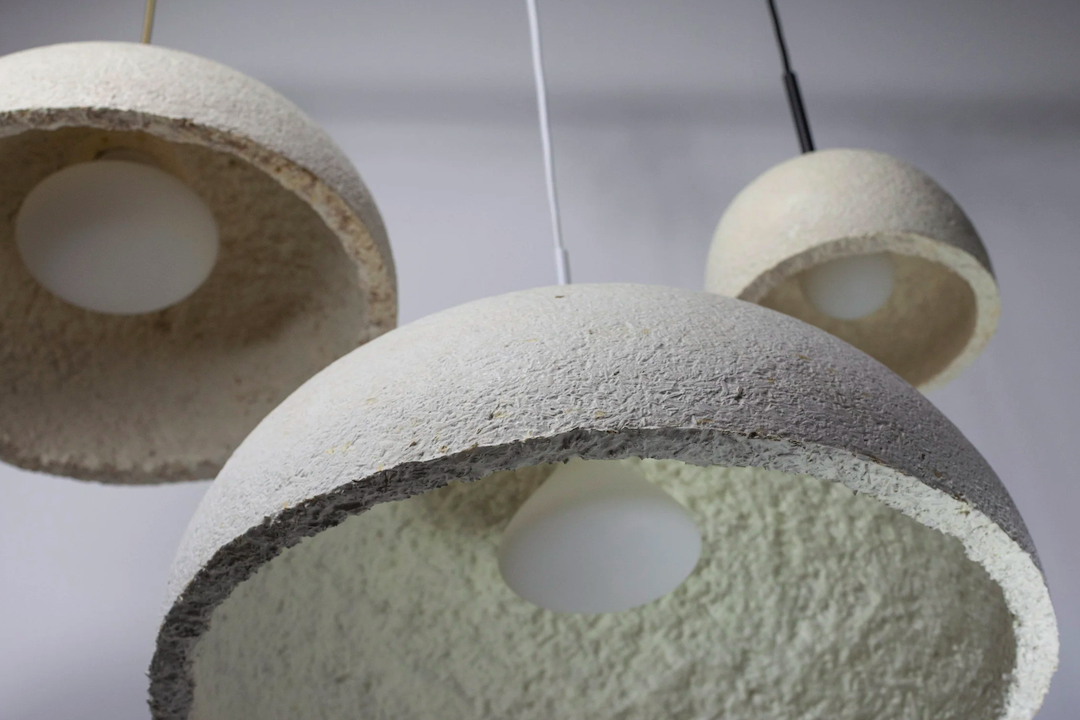
The natural growth process of mycelium results in a distinctive organic texture. This can range from a smooth, almost velvety finish to a more fibrous, tactile surface, depending on the mycelium strain and finishing techniques. This inherent texture provides a warmth and natural aesthetic that synthetic materials often struggle to replicate. The surface irregularities and subtle variations contribute to the uniqueness of each lamp, making it an individual object rather than a standardized unit.
When illuminated, the light interacts with these textures, creating a diffused and ambient glow. This can contribute to a more calming and inviting atmosphere within an interior space, a quality often sought in residential and commercial design. The material’s ability to diffuse light gently without harsh glare is a practical benefit.
Formability and Customization
Mycelium’s ability to grow into various intricate shapes makes it highly versatile for lighting design. Manufacturers can custom-design molds to create a wide array of pendant lamp forms, from minimalist domes to more sculptural and complex geometries. This formability allows for a high degree of customization, catering to specific design requirements and aesthetic preferences.
The material does not dictate a singular form but rather adapts to the designer’s vision. This flexibility encourages innovation in lighting design, moving beyond standard industrial forms. The ability to create complex shapes without extensive machining or fabrication processes further enhances its appeal in a design context.
Compatibility with Lighting Components
Despite its organic nature, mycelium can be seamlessly integrated with standard lighting components. Lamp holders, wiring, and dimming mechanisms can be incorporated during or after the drying process, ensuring functional compatibility. Careful design ensures that the thermal output of the light source does not degrade the mycelium material over time.
LED technology, with its low heat emission and long lifespan, is particularly well-suited for mycelium lamps. This combination further enhances the sustainability profile, as LED lamps consume less energy and require less frequent replacement. The marriage of cutting-edge lighting technology with a biomaterial speaks to a holistic approach to sustainable design.
Challenges and Future Outlook
While mycelium pendant lamps offer substantial advantages, their widespread adoption faces certain challenges that require ongoing research and development.
Durability and Moisture Sensitivity
Mycelium composites, while durable, are not inherently as robust as some traditional materials like metal or high-density plastics. Their mechanical properties can be influenced by factors such as the mycelium strain, growth conditions, and substrate composition. For applications requiring high impact resistance or structural load-bearing capacity, further material optimization is necessary.
A significant challenge is moisture sensitivity. Mycelium is a biological material, and prolonged exposure to high humidity or direct water can lead to degradation or fungal regrowth. While sealants can mitigate this to some extent, it limits their use in certain environments, such as outdoor settings or extremely humid interior spaces. Addressing this requires developing more advanced hydrophobic treatments or genetically modifying mycelium strains for increased water resistance.
Scalability of Production
Scaling up mycelium production from laboratory to industrial levels presents logistical challenges. Consistent material quality, standardized growth protocols, and efficient drying methods are crucial for mass production. Ensuring a reliable supply chain for diverse agricultural waste substrates also requires coordinated efforts.
Currently, much of the production operates on a smaller scale. To compete with conventional manufacturing, the efficiency and cost-effectiveness of mycelium production need further refinement. This involves optimizing reactor designs for controlled growth environments and automating aspects of the substrate preparation and inoculation processes. The goal is to move beyond artisanal production towards a more industrialized, yet still sustainable, model.
Cost-Effectiveness
At present, mycelium products can sometimes be more expensive to produce than their conventional counterparts, especially for specialized applications like intricate lighting fixtures. This is due to the novelty of the technology, the labor-intensive aspects of small-scale production, and the investment in research and development. However, as the technology matures, production efficiency improves, and economies of scale are realized, costs are expected to decrease.
The long-term cost-effectiveness also needs to consider the hidden environmental costs of traditional materials, which are often externalized. When the full life cycle assessment is considered, including end-of-life disposal and pollution, mycelium products can become more competitive. As a reader, you might consider the initial investment against the broader environmental and social returns.
Despite these challenges, the future of mycelium in sustainable design, particularly for lighting, appears promising. Continued research into material properties, advanced biomanufacturing techniques, and innovative sustainable treatments will likely overcome current limitations. The increasing consumer demand for eco-friendly products also provides a strong market impetus for this innovative material. Mycelium pendant lamps are not just illuminating spaces; they are illuminating a path towards a more sustainable and circular economy.