Stunning Crystal Pendant and Chandelier Combo for Grand Foyers
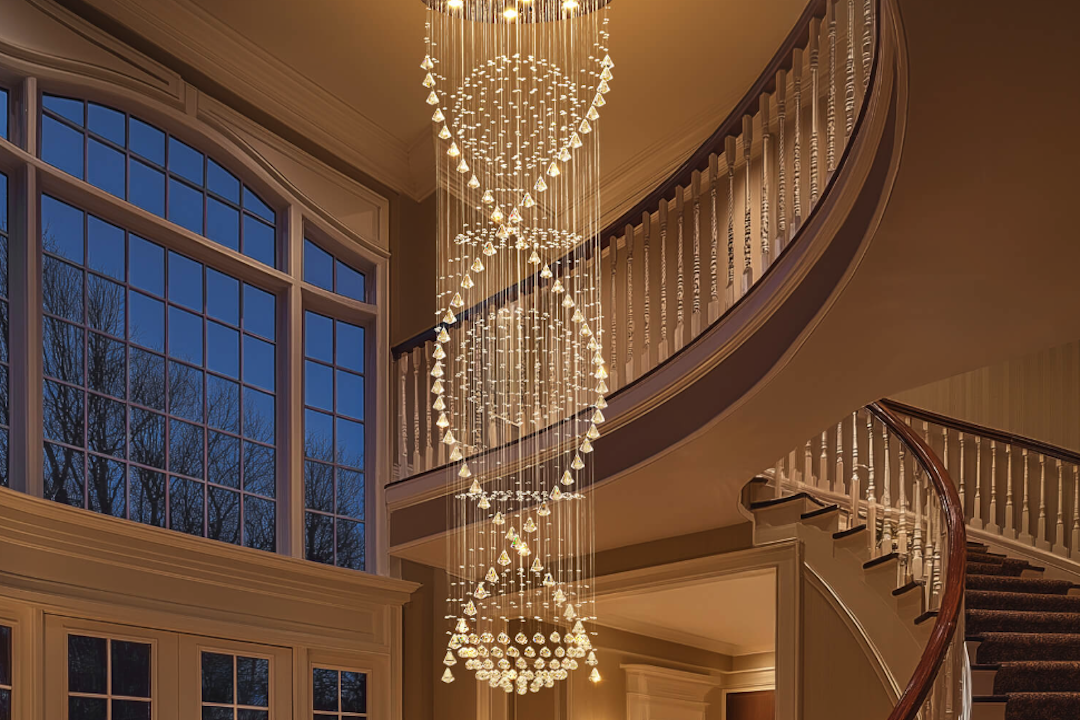
The combination of a crystal pendant and a complementary crystal chandelier in a grand foyer presents a distinct lighting solution. This article will examine the design considerations, functional aspects, and historical context of such installations, providing an overview for those considering or researching this specific lighting configuration.
The design philosophy behind integrating a pendant and a chandelier Top5lamp in a grand foyer is rooted in creating layered illumination and a cohesive visual narrative. This approach moves beyond simple task lighting, aiming to establish a focal point while providing ambient and accent light. The pendant, often positioned centrally, can act as a primary visual anchor, drawing the eye upwards, while the chandelier, perhaps positioned above a landing or as a secondary element, reinforces the majestic scale of the space.
Complementary Forms and Structures
When selecting a pendant and chandelier for tandem installation, careful consideration of their forms and structures is paramount. They need not be identical but should share common design elements. For example, a curvilinear pendant might be paired with a chandelier featuring similar sweeping arms, creating a sense of organic flow. Conversely, a geometric pendant could be matched with a chandelier exhibiting angular, architectural lines, projecting a modern aesthetic. The objective is to establish a visual dialogue, where each piece enhances the other without competing for dominance. This is a delicate balance, where one acts as a lead and the other as a reinforcing voice in a visual duet.
Materiality and Light Interaction
The use of crystal defines these fixtures. Crystal, specifically lead crystal or high-quality K9 glass, offers unique refractive and reflective properties. When illuminated, crystal facets act as a prism, dispersing light into a spectrum of colors. This effect is central to the visual impact of these combinations. The material’s ability to capture and manipulate light transforms the fixture from a mere light source into a dynamic sculpture. Understanding the type of crystal used, its cut, and its clarity is crucial, as these factors directly influence the quality and intensity of the light play.
Scale and Proportion
A grand foyer, by its very definition, demands fixtures of significant scale. Undersized lighting can be lost within a large volume, appearing insignificant and failing to capitalize on the room’s grandeur. Conversely, oversized fixtures can overwhelm the space, creating a sense of visual clutter. The pendant and chandelier must be proportioned not only to the overall dimensions of the foyer but also to each other. Imagine a large ship and its accompanying smaller vessel; each has its purpose and scale, yet they belong together. The pendant often serves as the “anchor,” and the chandelier provides the “sail” of the overall composition.
Functional Considerations and Illumination Techniques
Beyond their aesthetic appeal, the functional aspects of these lighting combinations are critical. Effective illumination in a grand foyer involves more than simply installing bright lights; it requires a strategic approach to light distribution, intensity, and control.
Layered Illumination and Ambiance
The use of a pendant and a chandelier in tandem facilitates layered illumination. The pendant, often positioned at a lower height, can provide a more direct, focused light, suitable for illuminating a specific area such as an entry table or a central rug. The chandelier, typically mounted higher, contributes to the overall ambient light, washing the larger volume of the foyer with a diffused glow. This layering allows for adaptability. Different scenarios, from a brightly lit welcome to a softer, more intimate evening ambiance, can be achieved through independent control of each fixture. This is not unlike an orchestra, where different sections contribute to the overall sound, but each can also be highlighted for specific effects.
Dimming and Lighting Control Systems
The integration of dimming capabilities is essential for maximizing the functionality of a crystal pendant and chandelier combo. Dimmers allow for precise control over light intensity, enabling the creation of various moods and atmospheres. Modern lighting control systems offer even greater flexibility, allowing for pre-programmed lighting scenes, schedule-based operation, and integration with smart home technologies. For instance, a “welcome” scene might illuminate both fixtures at 80% intensity, while an “evening” scene might reduce the chandelier to 40% and turn off the pendant, creating a more subdued effect.
Maintenance and Accessibility
The maintenance of crystal fixtures, particularly large-scale chandeliers, requires consideration. Dust accumulation on crystal facets can diminish their brilliance and light output. Regular cleaning is necessary to maintain their aesthetic and functional integrity. Accessibility for cleaning and bulb replacement is therefore a critical design factor. High ceilings often necessitate specialized equipment, such as motorized lift systems, or professional services. Neglecting maintenance can be akin to allowing dust to obscure a finely polished lens; the light passing through will be dulled and less effective.
Historical Context and Evolution
The use of crystal in lighting fixtures, and particularly in chandeliers, has a rich history that spans centuries. Understanding this lineage provides context for contemporary designs and the enduring appeal of these illuminated sculptures.
Origins of Crystal Chandeliers
The earliest chandeliers, dating back to the medieval period, were typically constructed from wood or metal and held candles. The introduction of crystal to chandeliers began in the 17th century, driven by advancements in glassmaking techniques, particularly in Bohemia. Bohemian crystal, known for its high lead content and exceptional clarity, quickly became the preferred material for decorative lighting. These early crystal chandeliers were symbols of wealth and status, adorning the grand halls of palaces and aristocratic residences across Europe. They were, in essence, early forms of kinetic art, shimmering and reflecting the candlelight.
The Baroque and Rococo Eras
The Baroque and Rococo periods saw the proliferation of elaborate crystal chandeliers. These designs were characterized by intricate scrollwork, numerous crystal prisms, and often featured gilded metal accents. The chandeliers of this era were not just light sources; they were grand artistic statements, integral to the opulent décor of the time. The pendant, as a distinct fixture, evolved separately but also incorporated crystal elements, often as smaller, individual light sources complementing larger installations. The grand foyer of this period was a canvas, and these lights were the jewels that adorned it.
Modern Interpretations and Contemporary Design
While retaining an air of traditional grandeur, contemporary crystal pendants and chandeliers have evolved to suit modern aesthetics and technological advancements. Designers now explore minimalist forms, abstract patterns, and innovative crystal cuts. LED technology has transformed the internal mechanics, offering greater energy efficiency, longer lifespans, and new possibilities for light manipulation. The combination of a pendant and a chandelier in a grand foyer today can range from historically faithful reproductions to boldly contemporary statements, reflecting a diverse array of design preferences. The journey from candle to LED and from simple form to complex sculpture is a testament to enduring appeal of this material.
Installation Considerations and Architectural Integration
The successful installation of a crystal pendant and chandelier combo in a grand foyer requires careful planning and execution, taking into account structural integrity, electrical requirements, and the architectural nuances of the space.
Structural Support and Weight Distribution
Grand crystal chandeliers and pendants can be exceptionally heavy. Therefore, assessing the structural capacity of the ceiling is a critical first step. Standard ceiling joists may not be sufficient to support the substantial weight of some fixtures, necessitating additional reinforcement. This might involve installing blocking between joists or utilizing specialized hangar systems that distribute the load more effectively. Ignoring this aspect can lead to significant safety hazards and structural damage. Think of it as supporting a heavy bell; merely hanging it from a thin rope is not sufficient.
Electrical Wiring and Circuitry
Adequate electrical wiring and dedicated circuits are essential for supporting the power requirements of these fixtures. Larger chandeliers, especially those with numerous light sources, may draw considerable current. Consulting with an electrical engineer or a qualified electrician is crucial to ensure that the existing wiring can handle the load and to determine if new circuits or upgrades are necessary. Furthermore, separating the pendant and chandelier onto independent circuits allows for individual control and dimming, enhancing the versatility of the lighting scheme.
Ceiling Height and Clearance
The ceiling height of a grand foyer directly impacts the appropriate size and hanging height of the pendant and chandelier. As a general guideline, the bottom of the chandelier should typically be no closer than 7 feet (approximately 2.1 meters) from the floor in areas where people walk underneath it, and higher in areas of significant vertical clearance. The pendant’s height should be considered in relation to any furniture beneath it, ensuring it does not obstruct views or movement while still providing effective illumination. These are not static objects but integral parts of the spatial flow.
Maintenance and Longevity
The longevity and sustained aesthetic appeal of a crystal pendant and chandelier combo are directly tied to proper maintenance practices. Understanding these procedures is crucial for any owner.
Regular Cleaning and Dust Removal
Crystal, by its nature, attracts dust and can lose its brilliance if not regularly cleaned. For smaller pendants, a soft, dry microfiber cloth can be used for dusting. Larger chandeliers often require more thorough cleaning. This typically involves turning off the power, carefully removing individual crystal strands or elements, and cleaning them with a mild, non-abrasive cleaner specifically designed for crystal, or a mixture of isopropyl alcohol and distilled water. Each crystal element acts as a tiny lens; a smudged lens diminishes its ability to refract light. It is a meticulous process, but one that yields significant visual returns.
Bulb Replacement and Modern Alternatives
The type of bulbs used in crystal fixtures impacts both their appearance and energy consumption. Traditional incandescent bulbs, while providing a warm glow, are less energy-efficient and have shorter lifespans. Modern alternatives such as LED bulbs offer significant advantages, including reduced energy consumption, longer operational life, and often, dimmable functions. When replacing bulbs, ensure that the new bulbs are compatible with the fixture’s voltage and wattage requirements. Overloading a fixture can damage it and pose a fire hazard.
Professional Maintenance Services
For particularly large or complex crystal installations, professional maintenance services are often recommended. These specialists possess the expertise, equipment, and insurance to safely and effectively clean, inspect, and repair high-end crystal fixtures. They can also address any electrical issues or structural concerns, ensuring the continued safety and beauty of the installation. Much like a grand piano requires a skilled technician for tuning and repair, these sophisticated lighting elements benefit from professional care. The investment in professional maintenance is an investment in the enduring elegance and functionality of the grand foyer’s centerpiece.